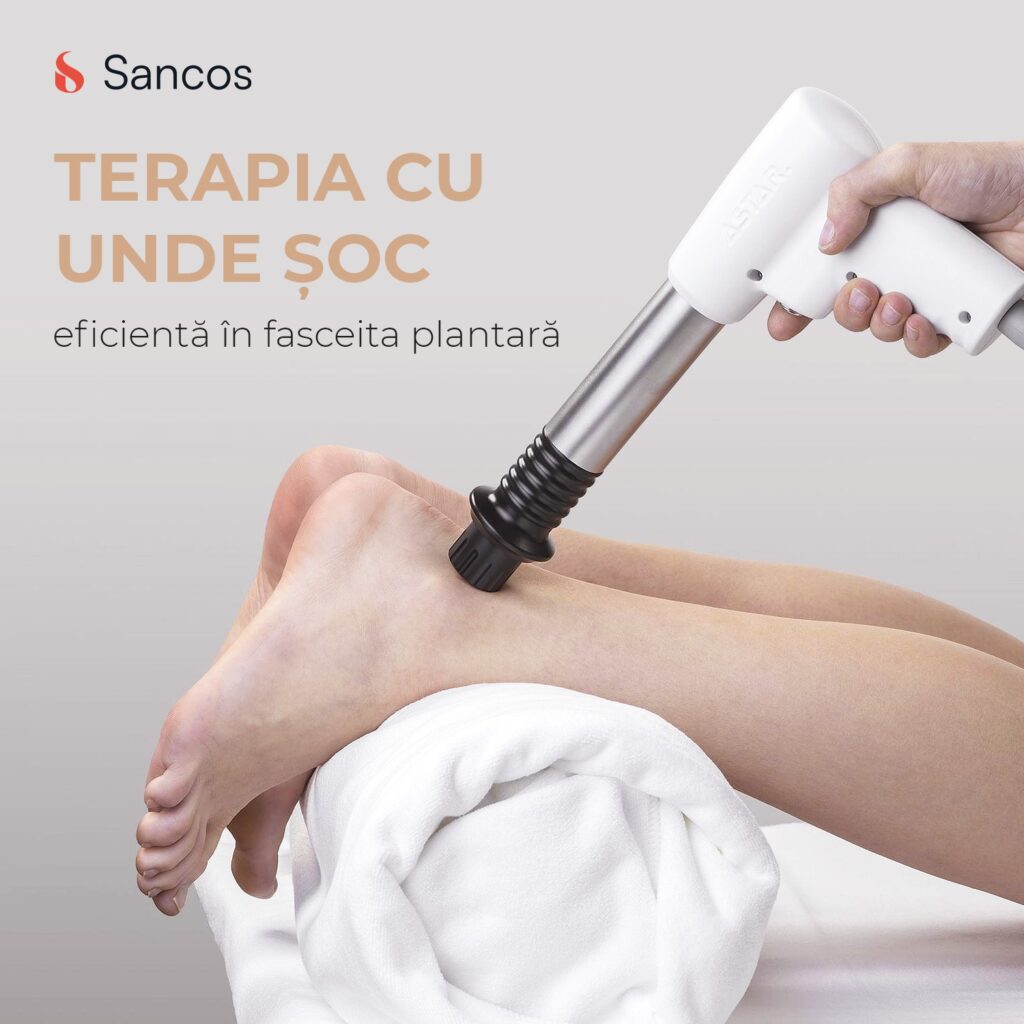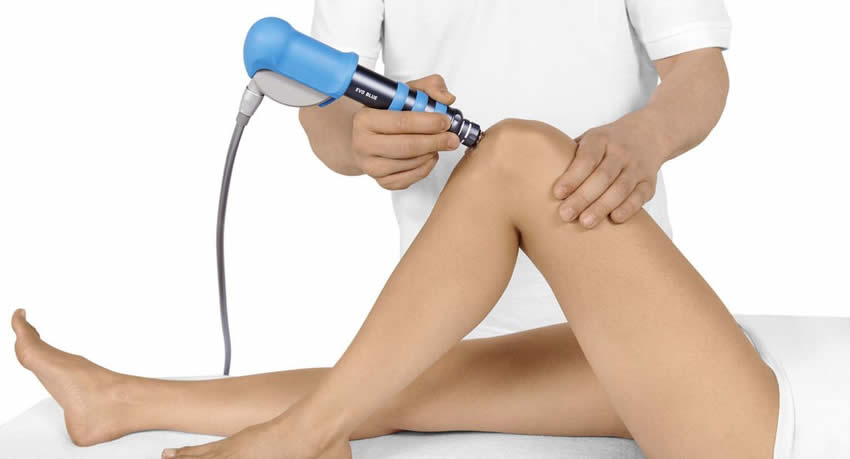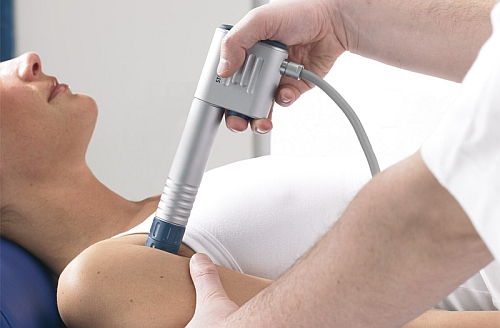

Shockwave therapy is a new technology that uses shock waves to treat chronic pain of the musculoskeletal system. Shockwave therapy is based on generating very intense energy over a very short time (10 milliseconds), so the shock wave passes through the tissues faster than the speed of sound. Shockwave therapy is used successfully in orthopedics, aesthetic medicine and sports medicine, in the rehabilitation and treatment of muscle, ligament and joint disorders.
How does this therapy work?
The shock wave puts mechanical pressure on the affected tissues, which increases cell permeability, boosting microcirculation and cell metabolism and speeding up both healing and the breakdown of calcium deposits.
The shock wave acts on pain through 2 mechanisms:
- Hyperstimulation analgesia – the nerves targeted by the shock waves are stimulated so strongly that their activity drops – a temporary effect that appears at the first session.
- Then, through continued stimulation of the nerves, the threshold is crossed in the following sessions, which recalibrates how pain is perceived.
Benefits of the therapy
- Eliminates pain
- Promotes healing
- Increases local circulation, improving tissue metabolism
- Increases collagen production
- Relaxes the muscles
- Breaks down calcified fibroblasts
Advantages of the therapy
- Effective in 70-80% of cases
- Treats chronic pain
- Improves mobility
- No medication
- Short sessions – 10-20 min
- Non-surgical, non-invasive treatment
The following conditions can be treated:
- Plantar fasciitis – a heel spur forms under or behind the heel and is caused by long-standing inflammation of the plantar fascia or the Achilles tendon where they attach to the heel bone. Shockwave therapy can eliminate the symptoms, so you can put your full weight on your foot again without pain.
- Hip pain – trochanteric bursitis, which forms between the gluteus maximus muscle and the trochanter.
- Knee pain – patellar tendinitis, felt as pain where the patellar tendon attaches.
- Achilles tendon pain – Achilles tendinitis, which can appear after activities such as running, jumping or other injuries.
- Shoulder pain – shockwave therapy has proven effective in 81% of cases, reducing pain and increasing shoulder mobility. If you do a sport that strains the shoulder, or have pain when raising your arm, shockwave therapy may spare you an operation.
- Elbow pain – medial and lateral epicondylitis is inflammation where the arm muscles' tendons attach; it causes elbow pain that gets worse with movement, especially when rotating the forearm.
- Back pain – if your back hurts, you are not alone. Almost everyone has had back pain at some point, at work, during daily activities or on vacation.
Frequently asked questions
How long does a session last?
A session lasts 10-20 minutes. 3-5 sessions are needed, 5-10 days apart.
What is the success rate of this treatment?
Worldwide statistics show a success rate of 77-81%.
Is this treatment painful?
Depending on how intense the patient's pain is, the treatment can be slightly uncomfortable, but its intensity is adapted to each patient's tolerance.
Is there pain after a shockwave session?
The pain disappears completely right after the treatment, but mild discomfort may appear later and last from a few hours to a few days. During this time, do not use ice or anti-inflammatory drugs. Resting the treated area for 48 hours is recommended.
Contraindications
- Cortisone injections must be given at least one month before shockwave therapy.
- Blood clotting disorders.
- Taking anticoagulants such as heparin or Fraxiparine at the same time.
- Tumors in the treated area.
- Pregnancy.
- Diabetes.