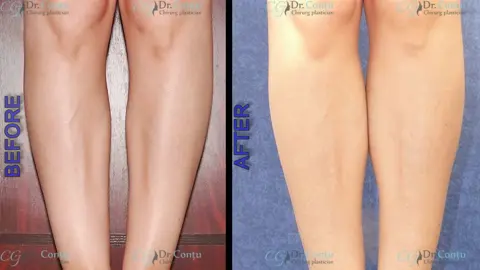
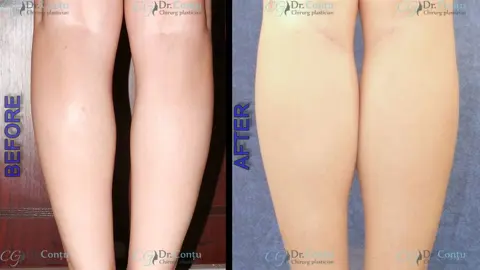
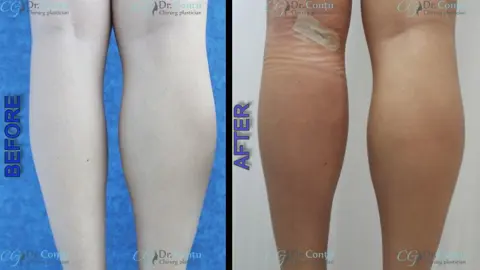
The operation is recommended for patients with deformities or hypoplasia of the calf muscles and, in some cases, when there is a marked difference between the calves. The asymmetry may be caused by past infectious diseases, nerve damage, immobilization of the limb or hereditary features.
Surgical technique and procedure
Augmentation is possible not only on the back of the calf but also on its outer back side. Enlargement can only be done on the upper and middle third of the calf. The operation is done under intravenous anesthesia, with the patient lying face down. A 3-4 cm incision is made in the fold behind the knee. The implant is placed under the muscle fascia. The wound is closed in layers, usually without a drain. A compression dressing and limited movement for a few days are mandatory.
Features and progress
One feature of the operation is that the implant's outline may be visible in thin patients. In the first weeks after the operation, mild pain while walking is possible. According to the specialist literature, inflammation requiring removal of the implant occurs in about 1% of cases.
After the operation
Immediately after the operation, limited movement and compression garments are mandatory. In the first days, pain may occur when walking and when lowering the legs from the bed. Marked swelling may be present. It can be relieved by resting with the legs raised and by painkillers. The discomfort gradually disappears, which takes 8 to 12 weeks.