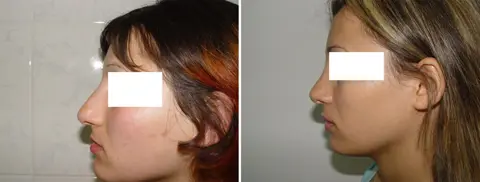
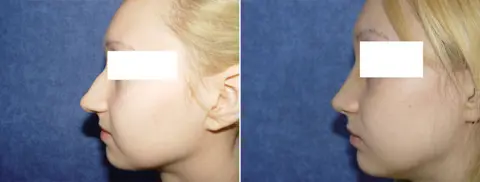
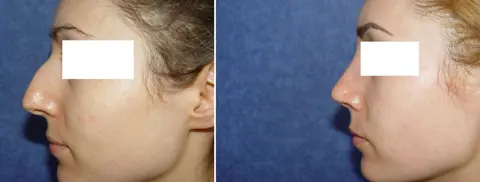
Rhinoplasty transforms the nose by reducing or increasing its size, removing a hump, changing the shape of the tip or bridge, narrowing the nostrils or changing the angle between the nose and the upper lip. This operation can also relieve certain breathing difficulties when combined with surgery on the nasal septum. In that case it is called rhinoseptoplasty.
Length of the operation
A primary rhinoplasty takes about 1-3 hours, depending on its complexity; secondary rhinoplasties can take more than 3 hours.
Anesthesia
In milder cases, local anesthesia can be used. Correcting more complex nasal deformities requires general intravenous or inhalation anesthesia.
Inpatient / Outpatient
Patients usually stay in hospital for a day or two after rhinoplasty. In simpler cases, the operation can be an outpatient procedure.
Side effects and risks
Temporary swelling, bruising around the eyes and/or nose, and minor bleeding are possible. In rare cases, infection, asymmetry or an unsatisfactory nose shape may occur, which would require further surgery.
Recovery
The patient can return to work after a week. More intense activities can be resumed after two to three weeks. The patient should avoid any activity that could affect the nose during the first 2 months after the operation. A first result of rhinoplasty can be seen after 3-4 weeks, and the final result after 6-12 months.
Results
Permanent.