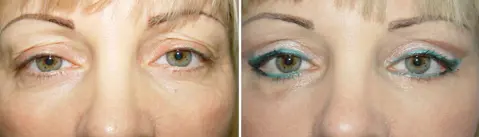
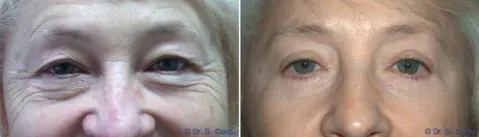
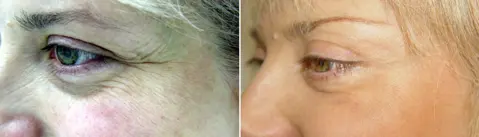
Blepharoplasty (eyelid surgery) aims to remove excess skin and fat from the upper and/or lower eyelids. Skin folds and fat "bags" on the eyelids make the eyes look permanently tired, and sometimes the excess skin even narrows the field of vision. The upper and lower eyelids can be corrected at the same time, with or without a facelift.
Indications
Patients who have this operation are generally over 35, but in certain situations it can be done earlier, in which case mainly the fat pads under the skin are removed. It is important that the person is in good health, and before the operation it is a good idea to have an eye examination, especially for patients who wear glasses.
Risks of the operation
Any surgery involves risks. Blepharoplasty must be done by a surgeon experienced in the field, and then the risks are minor and mostly unpredictable. They include bleeding, which is very rare thanks to gentle intraoperative handling and specialized instruments. Removing too much excess skin, especially on the lower eyelid, causes ectropion – retraction of the lower eyelid that prevents the eye from closing completely; if it does not improve within 1 month, it must be corrected surgically.
Before the operation
2 weeks before the operation, stop taking aspirin or other medicines that can affect blood clotting. The operation is done outside your menstrual period. If you have medical problems (blood pressure, vascular conditions, diabetes, epilepsy, allergies to medicines, etc.), tell the surgeon. Avoid smoking for at least 2 weeks before the operation, as well as sun exposure or tanning beds. Upper blepharoplasty is usually done under local anesthesia, with or without mild intravenous analgesia. The patient is in a light sleep, can wake up quickly, can cooperate with the surgeon on the operating table and feels no pain. Upper and lower blepharoplasty can also be done under general anesthesia for maximum comfort for both patient and surgeon. The operation takes 1-3 hours, depending on its extent. It almost always starts with the upper eyelids, then moves on to the lower ones. The incisions are made in the upper eyelid crease and, on the lower eyelid, 2 mm below the lash line. The skin is separated from the muscle beneath, the excess fat bags are removed and the extra skin is cut away. The incisions are closed with very fine stitches, which are removed on day 4-5; the swelling lasts about 7-12 days.
Hospital stay after the operation
If the operation is done under local anesthesia, the patient can go home, provided they strictly follow the instructions to rest that night. If the operation is done under general anesthesia, a one-day hospital stay is advised. During the stay, special cooling glasses and local antibiotic drops are applied. Since swelling and bruising appear quickly after the operation, it is a good idea to have tinted protective glasses with you when you leave.
Recovery after the operation
The swelling and bruising after the operation disappear in 7-18 days, during which it is recommended to take time off work, or at least for the first 3 days. Intense physical activity can raise blood pressure and cause bleeding. Since the eye is slightly more sensitive to sun and wind, wearing tinted protective glasses is recommended until the bruising is gone. The scars become white and thin a few weeks after the operation.