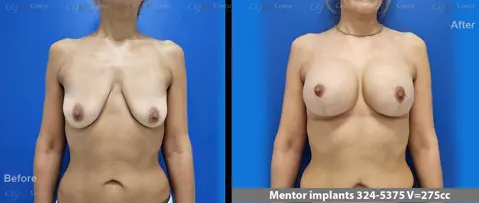
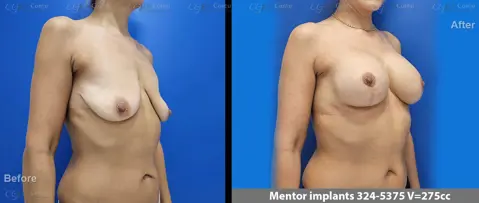
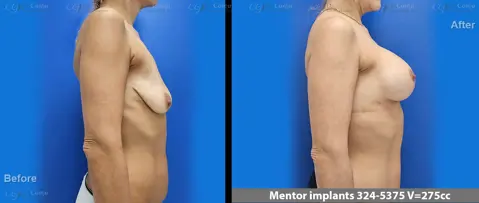
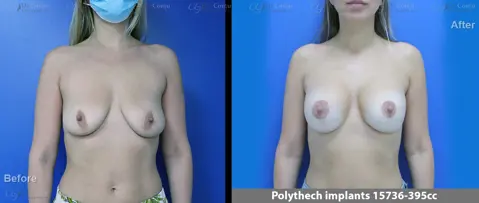
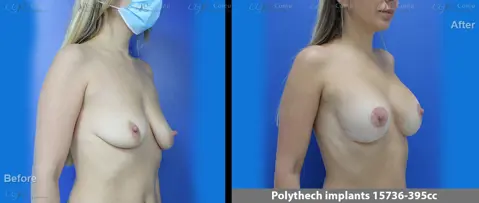
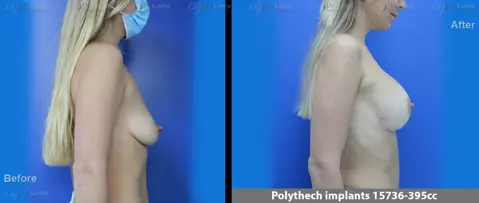
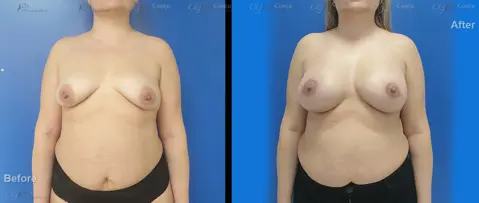
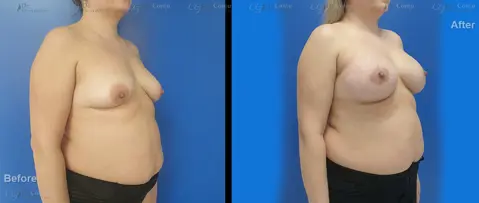
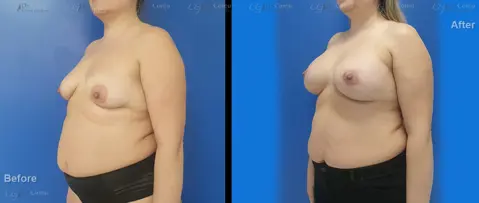
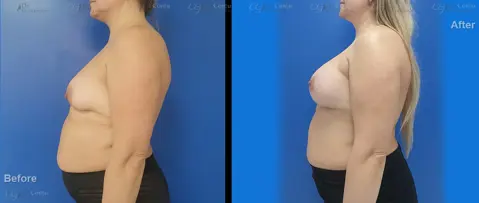
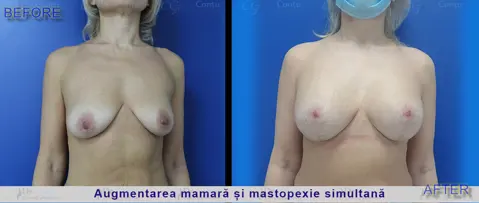
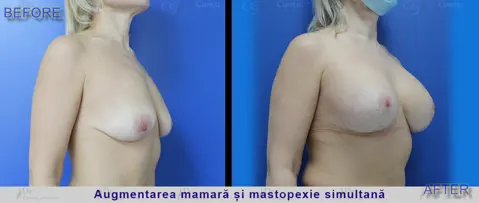
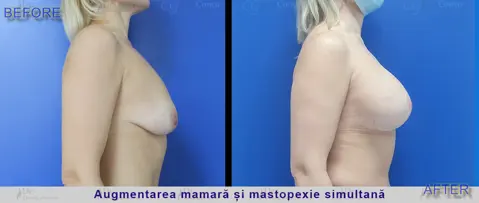
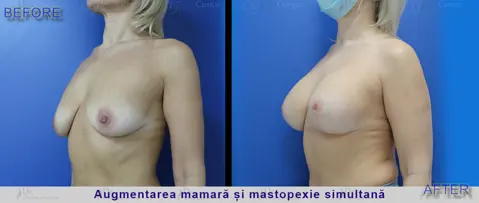
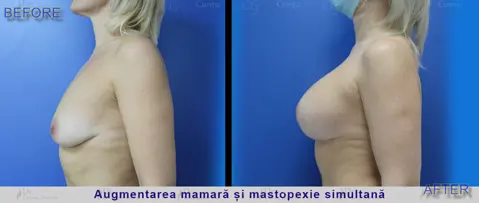
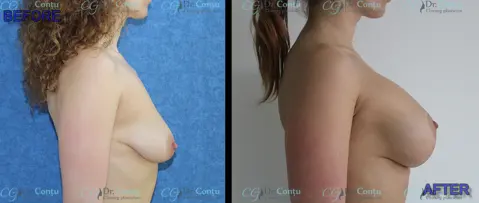
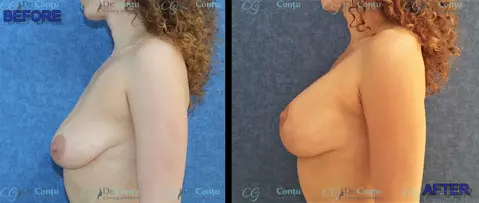
Some women have small breasts, others have ptosis (sagging breasts). In many cases, however, patients have both problems. Weight loss can significantly shrink the breasts and then lead to ptosis. Breasts can also change this way after pregnancy, or in women who have had several pregnancies. Restoring the breasts means enlarging and then lifting them, using the techniques we call augmentation and mastopexy. Before the operation, it is vital to take into account the patient's general health and to examine the breasts (mammography, ultrasound), establishing the following: their shape and volume, previous operations, the motivation for and expectations of the operation, and an understanding of the surgical options. We must also consider the quality of the skin, the breast volume, the size of the areolas and the features of the chest wall. We then choose the type and volume of the breast implants. The last step before the operation is the preoperative marking.
Surgical technique
The choice of technique for correcting the breast shape depends on the degree of ptosis (sagging). Breast augmentation starts with a subglandular or periareolar approach. Mastopexy has the following variants: periareolar, vertical and inverted-T. Depending on the degree of breast ptosis (I, II or III), the surgical technique for lifting the breasts is chosen. For minor ptosis (grade I), a periareolar mastopexy with a single scar around the areola is chosen, and in some cases breast enlargement with high-profile implants alone may be enough, without a periareolar mastopexy. An implant that is too large will not have the desired lifting effect. Therefore, most breast augmentations with mastopexy end with a vertical or "inverted-T" scar.
It is important to note that the surgery can be done simultaneously – augmentation together with mastopexy – or in stages, as two separate operations. I recommend a single-stage operation to my patients. Combining breast augmentation and mastopexy achieves the best result in one operation. Simultaneous breast augmentation and mastopexy is a procedure with many options. However, patients should know that performing it correctly is extremely important to get the right final position of the implant, the nipple and the scar.
The scars fade over the course of a year. As for complications, they are very rare: infections, asymmetry, capsular contracture, etc. If they do occur, corrective procedures will be needed.
Finally, I can say with confidence that simultaneous breast augmentation and mastopexy can bring patients satisfaction and excellent results.